Losing a pet can leave an enormous absence. Their routines were woven into the day: the sound of their paws, the place they slept, the way they asked for attention and the small behaviours nobody else would notice. When those details suddenly stop, grief can feel both intense and strangely invisible to other people.
A pet memorial journal gives those memories somewhere safe to live. It is not about forcing yourself to “move on” or making every page beautiful. It is a private place to remember the full relationship—funny, ordinary, difficult and deeply loved.
Begin when the time feels right
There is no correct day to start. Some people need to write immediately; others cannot approach photographs for weeks or months. You can begin with one sentence and close the journal. You can also ask someone you trust to help collect material until you are ready.
Grief does not follow a tidy order. A journal should support you, not become another task you feel guilty about avoiding.
Choose a format that feels manageable
A blank notebook offers freedom, while a guided journal removes the pressure of deciding what to write. A digital document may be easier if handwriting feels tiring or if you want to add photographs. A printed version can feel more tangible and private.
You can combine formats: type longer memories, keep a handwritten page for personal notes and save photographs in a digital folder.
Record the basic story
Start with the facts that frame your pet’s life:
- Their name, nicknames and how those names developed
- When and how they joined your family
- Their breed or appearance
- The places they lived
- People and animals they loved
- Important health events
- The dates you want your family to remember
If dates are uncertain, approximate ones are fine. This is a memory book, not an official record.
Capture personality through small details
The most meaningful memories are often ordinary. Write about the exact way your pet greeted you, where they waited at mealtimes, which toy they always chose and what they did when they knew they were in trouble.
Useful prompts include:
- What made them instantly excited?
- What were they afraid of?
- How did they comfort you?
- Which sound or expression was uniquely theirs?
- What habit used to annoy you but now makes you smile?
- What did a perfect day look like for them?
These details recreate a living personality more powerfully than a formal summary.
Tell the story of how you changed each other
Pets influence the rhythm of a household and sometimes the direction of a life. Perhaps they helped you through illness, encouraged you outside, introduced you to neighbours or taught a child about gentleness and responsibility.
Write about who you were when the relationship began and what became different because they were there. This is not about proving that the loss had a purpose. It is about recognising the depth of the bond.
Add photographs with context
Choose images that show personality rather than only perfect portraits. Include the blurred photograph that captures excitement, the favourite sleeping position and the ordinary corner of the home they claimed.
Add names, places and short captions. Instead of “at the beach,” write “First trip to Bournemouth, when Milo barked at every wave.” Context turns an image into a memory someone else can understand.
Include difficult memories without letting them take over
Illness, ageing and end-of-life decisions can dominate the mind after a loss. You may want to record what happened, questions you asked and the care you gave. Writing can help separate the final chapter from the whole life.
Be gentle with guilt. Many loving decisions are made with incomplete information under painful circumstances. If certain details feel overwhelming, leave a page blank or return later. The journal belongs to you.
Create a page of gratitude
List what you are grateful to your pet for: companionship, laughter, routine, protection, patience or simply their presence. You might write a letter beginning, “Thank you for…” and allow it to be as simple or emotional as it needs to be.
Gratitude does not cancel grief. Both can exist together.
Invite family members to contribute
Children and adults may remember different versions of the same pet. Give each person a page for a story, drawing, photograph or message. This can validate grief within the household and preserve details one person alone would miss.
Do not pressure anyone to participate. People grieve differently, even when they loved the same animal.
Decide how the journal will be kept
You might store it with a collar, tag, favourite photograph or condolence cards. If the journal is digital, keep a backup and use filenames that will remain understandable. Some people create a printed copy for the family and retain a private section for themselves.
A gentle place for remembrance
A memorial journal does not need a final page. You can add memories when they return unexpectedly, even years later. The aim is not to finish grieving. It is to give love and memory a form that can remain.
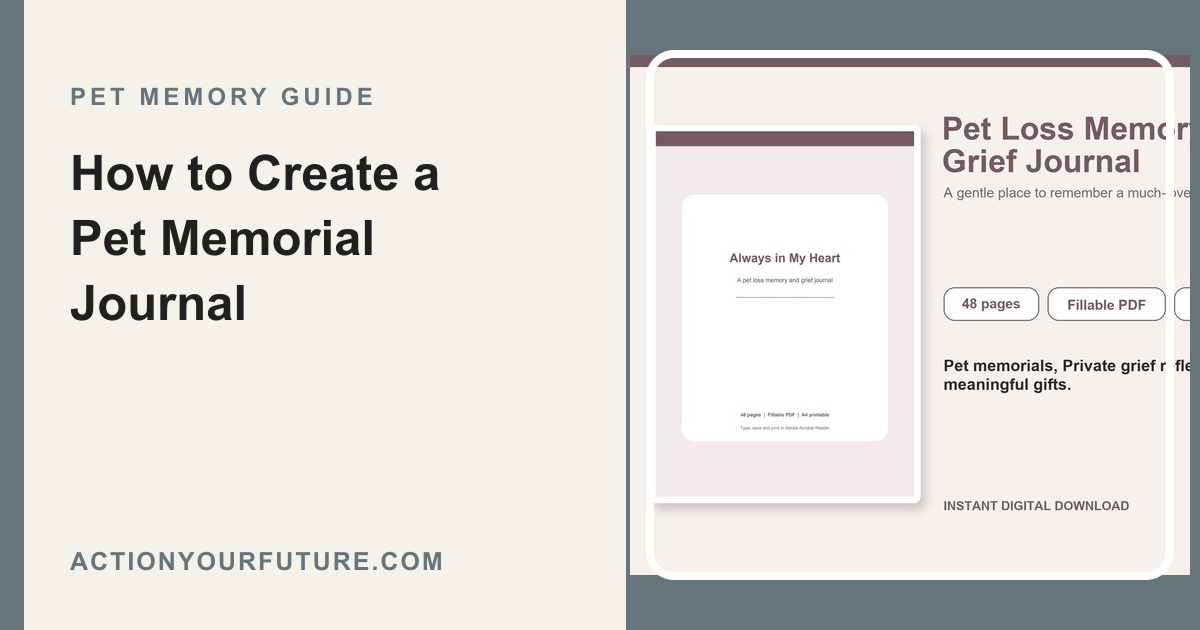
The Pet Loss Memory & Grief Journal provides compassionate guided pages for photographs, memories, reflection and a lasting tribute. For happier ongoing memories, the Pet Memory Book helps record a companion’s personality and adventures throughout their life.
If grief is seriously affecting your safety or ability to function, consider speaking with a qualified health professional or a trusted support service. A journal can be supportive, but it is not a replacement for professional care.
Leave a Reply