Every family has an archive, even when no one calls it that. It lives in half-remembered stories, names written on the back of photographs, recipes made without measurements and phrases that only make sense to the people who were there.
The danger is not usually that anyone chooses to erase these memories. They disappear quietly. A relative dies, a box is cleared out, an old phone stops working or younger family members assume they will ask the questions “one day.” Preserving family stories does not require expensive equipment or expert research. It requires a simple process and the willingness to begin.
1. Start with the people, not the paperwork
Documents tell you when something happened. People tell you what it felt like. Begin with the oldest relatives or anyone who holds a large part of the family’s shared memory. Ask about childhood homes, work, courtship, migration, celebrations, difficult periods and the small habits of people who are no longer here.
Do not limit yourself to major milestones. Future generations may be just as fascinated by what breakfast looked like, how clothes were washed, where children played and what happened on an ordinary Friday night.
2. Make interviews feel like conversations
A list of questions helps, but a rigid interview can make people self-conscious. Start with a photograph or familiar object and let the conversation unfold. Useful prompts include:
- Who is in this photograph, and what were they like?
- What did your home feel like when you were a child?
- Which family tradition mattered most?
- What changed your life unexpectedly?
- What lesson should the younger generation remember?
Ask permission before recording. A phone voice recorder is often enough. If someone dislikes being recorded, take brief notes and write the story properly while it is still fresh.
3. Capture the voice as well as the facts
A polished summary is useful, but a person’s exact expressions carry personality. Keep memorable phrases, jokes, sayings and descriptions. Note where the conversation took place and who was present. These details give a future reader context and make the account feel human.
When dates are uncertain, label them honestly: “around 1968” is better than an invented exact year. Different relatives may remember the same event differently. Preserve both perspectives rather than forcing one official version.
4. Digitise photographs carefully
Scan important photographs at a good resolution or photograph them in bright, even light. Record the names of the people, approximate date, place and event. A perfectly scanned image without names quickly becomes a mystery.
Create filenames that remain useful outside any particular app, such as 1974-grandma-lina-wedding-leeds.jpg. Keep the original images unchanged and edit copies if you need to crop or improve them.
5. Preserve letters, certificates and recipes
Letters reveal relationships and everyday concerns that official records miss. Certificates provide reliable dates and names. Handwritten recipes preserve both food and family culture. Photograph or scan both sides of documents and add a short explanation of why each item matters.
For recipes, record the missing knowledge: what “a handful” means, how the mixture should look and which occasions the dish belonged to. A fillable family recipe book can turn scattered favourites into an organised keepsake.
6. Build one clear family archive
A simple folder system is more valuable than an elaborate system nobody understands. You might organise files by family branch, person or decade. Include a plain text document explaining the structure and spelling out family relationships.
Use at least two backups in different places. A practical approach is one copy on your computer, one external drive and one reputable cloud account. Check the archive each year and move files away from obsolete formats or devices.
7. Create a timeline
A family timeline helps separate overlapping generations and connects personal events with the wider world. Add births, moves, marriages, jobs, schools, military service and major turning points. Leave space for uncertainty and future discoveries.
Timelines also reveal gaps. You may realise that everyone knows where a grandparent lived in the 1980s but nobody knows why they moved there. That missing link becomes your next interview question.
8. Include difficult history with care
Family history is rarely entirely comfortable. There may be estrangement, poverty, discrimination, addiction, war or choices people regret. Do not pressure anyone to disclose what they want to keep private. When recording difficult events, distinguish between documented fact, personal memory and family rumour.
The goal is not to create heroes and villains. It is to preserve an honest, compassionate account that helps later generations understand the circumstances people faced.
9. Turn information into stories people will read
A database is useful, but stories create connection. Instead of writing only “Michael moved to London in 1972,” include why he moved, what he carried, where he slept on the first night and what surprised him about the city.
Combine photographs, short chapters, quotations and scanned documents. You can create a printed book, a private family website, a shared digital folder or individual life-story journals.
10. Share the archive before it is finished
A family archive is never truly complete. Share an early version and invite relatives to correct names, identify photographs and contribute memories. Giving people access also prevents the entire collection from depending on one person or one device.
Begin with one conversation
You do not need to preserve the whole family this weekend. Choose one person, one hour and five questions. That conversation may reveal stories nobody realised were at risk of being lost.
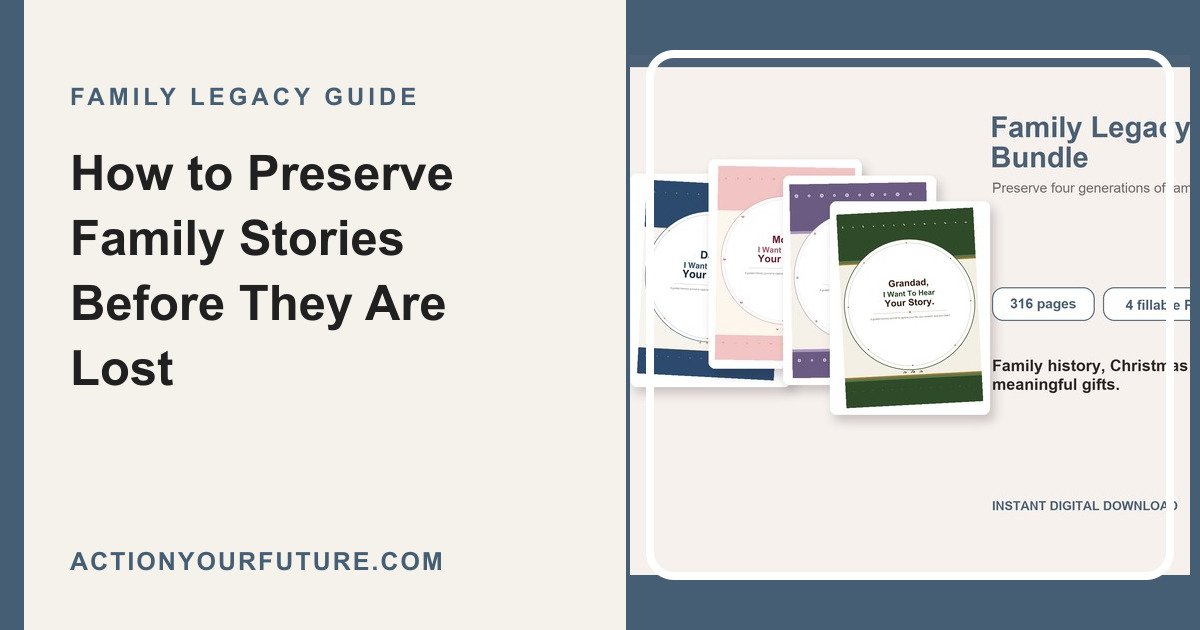
To make the process easier, the Family Legacy Story Bundle contains guided fillable journals for Dad, Mom, Grandma and Grandad. You can also start with our 75 questions to ask your dad or our guide to questions to ask your grandma.
Leave a Reply